
Liposuction removes localized fat deposits to reshape selected areas of the body. International patients often research treatment in Turkey because surgery, accommodation, transfers, and early follow-up may be organized within one trip.
Before travelling, patients should understand which areas will be treated, the total cost, the recovery period, possible risks, and what is included in the package.
Liposuction in Turkey at a Glance
| Topic | General Information |
| Typical package cost | Around €1,500–€3,000 |
| 360 liposuction | Around €1,800–€3,500 |
| Common treatment areas | Abdomen, waist, back, hips, thighs, arms, and chin |
| Procedure duration | Commonly 1–3 hours |
| Typical stay in Turkey | Around 3–7 days |
| Return to desk-based work | Often around 3–7 days |
| Early visible change | Commonly within 1–2 weeks |
| Final result | Usually assessed after 3–6 months |
| Full recovery | Often around 2–6 weeks |
These figures reflect current MedicaRoute treatment-page ranges. Larger procedures, including 360 liposuction, may require longer surgery and recovery than a smaller single-area treatment.
What Is Liposuction?
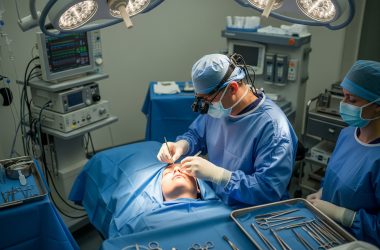
Liposuction is a body-contouring operation that removes fat through a thin tube called a cannula. Small incisions are made near the treatment area, and the loosened fat is removed using suction.
It is commonly used for areas where localized fat remains despite changes in diet, activity, or body weight. It is not designed as an obesity treatment and does not remove cellulite or stretch marks.
Liposuction can change body contours, but it does not automatically tighten significantly loose skin. In cases where excess skin is the main concern, another body-contouring procedure may need to be discussed.
How Much Does Liposuction Cost in Turkey?
Current MedicaRoute listings show an average all-inclusive range of approximately €1,500–€3,000 for standard liposuction packages. The listed range for 360 liposuction and liposuction of three body areas is approximately €1,800–€3,500.
| Treatment | Typical Package Range |
| Standard liposuction | €1,500–€3,000 |
| Abdominal liposuction | €1,500–€3,000 |
| 360 liposuction | €1,800–€3,500 |
| Liposuction of three body areas | €1,800–€3,500 |
| Vaser liposuction | €1,500–€3,000 |
These prices should be compared together with the actual treatment plan. A lower quote may cover one small area, while a higher quote may include several areas, longer operating time, general anesthesia, accommodation, and transfers.
What Affects the Final Cost?
Number and Size of Treatment Areas
Treating one limited area usually costs less than treating the abdomen, waist, back, and hips together.
The surface area also matters. Small-volume chin treatment is not directly comparable with multi-area body liposuction.
Treatment Method
Traditional, power-assisted, ultrasound-assisted, and laser-assisted methods may have different equipment, operating-time, and pricing structures.
Vaser liposuction uses ultrasound energy to help break down fat before removal. The current listed package range is similar to standard liposuction, although exact quotes can change according to the areas treated.
A future Vaser Liposuction vs Traditional Liposuction article could compare the procedure workflow, treatment areas, costs, recovery, and limitations without assuming that one method is automatically better.
Anesthesia and Facility Fees
The type of anesthesia may vary according to the number of areas, expected fat removal, procedure length, and the treatment setting.
Standard MedicaRoute liposuction information currently lists general anesthesia as common, while Vaser liposuction information lists sedation. The final anesthesia plan must be confirmed by the treating surgical and anesthesia teams.
Additional Procedures
Liposuction may be combined with skin removal, breast surgery, fat transfer, or another contouring procedure. Combined surgery usually increases operating time, recovery needs, and total cost.
Travel Services
Accommodation, private transfers, translation, recovery garments, medication, and follow-up may be included or charged separately.
What Additional Medical Costs May Arise After Assessment?
A preliminary liposuction quote may change after the surgeon examines the treatment areas, skin elasticity, existing scars, general health, previous surgery, and the amount of fat that can be removed safely. These are additional medical costs rather than accommodation, transfers, or other travel expenses.
| Possible Additional Medical Cost | Why It May Be Required |
| Additional blood tests or medical clearance | When anemia, bleeding risk, existing medical conditions, or the planned extent of surgery requires further assessment |
| ECG, cardiology, or anesthesia evaluation | When the patient’s medical history or the expected operation duration requires additional clearance |
| Ultrasound or other diagnostic imaging | When a hernia, abdominal-wall problem, mass, previous surgical complication, or another condition is suspected |
| Treatment of an existing medical or skin condition | When infection, inflammation, uncontrolled illness, or another condition must be managed before surgery |
| Skin-removal surgery | When poor skin elasticity or substantial loose skin means that liposuction alone is unlikely to produce an appropriate contour |
| Tummy tuck, arm lift, or thigh lift | When excess skin in the treatment area requires surgical removal rather than fat removal alone |
| Glandular-tissue removal | When male chest enlargement includes glandular tissue that cannot be treated adequately with liposuction alone |
| Additional treatment areas | When the in-person examination shows that adjacent areas must also be treated to create a balanced contour |
| A staged or second procedure | When the total planned treatment cannot be performed safely in one operation |
| Extended hospital observation | When the volume treated, number of areas, anesthesia plan, or patient’s health requires longer monitoring |
| Additional compression garments or postoperative medical supplies | When these are medically required but not included in the original quote |
Liposuction works best when the skin has sufficient elasticity. When the skin is substantially stretched or loose, an additional skin-removal procedure such as a tummy tuck may be discussed instead of, or alongside, liposuction. Large-volume or multi-area liposuction may also require additional safety planning or staged treatment.
Patients should ask how many body areas are included, whether the quoted plan involves liposuction alone, and which tests, procedures, hospital services, and postoperative medical supplies would be charged separately. The final surgical scope and medical cost should be confirmed after the in-person examination.
Which Areas Can Be Treated?
Abdomen
Abdominal liposuction targets localized fat across the stomach area. It may improve the abdominal contour, but it does not remove significant loose skin or repair separated abdominal muscles.
Waist, Flanks, and Back
360 liposuction usually treats the midsection from several directions, including the abdomen, flanks, waist, and lower back. It is intended to create a more balanced contour around the torso rather than treating only the front of the abdomen.
A future 360 Liposuction: Treatment Areas, Recovery, and Results guide could explain how this differs from abdominal liposuction alone.
Hips and Thighs
Liposuction may be used on the outer thighs, inner thighs, hips, or selected areas around the knees. The treatment plan should consider skin quality and the relationship between adjacent areas.
Upper Arms
Localized fat can be removed from the upper arms. However, liposuction does not remove a large amount of loose or hanging skin.
Chin and Neck
Chin liposuction may be used to reduce localized fat below the chin and improve the neck or jawline contour. Skin elasticity can influence how the area appears after treatment.
Male Chest
Liposuction may form part of gynecomastia surgery when excess fat contributes to chest enlargement. Glandular tissue may require surgical removal rather than liposuction alone.
Liposuction Procedure: Step by Step
1. Preliminary Review
Before travelling, patients may be asked to provide:
- Photographs of the treatment areas
- Height and weight
- Medical history
- Previous operations
- Current medication
- Allergies
- Smoking or nicotine history
- Information about previous body-contouring procedures
An online review may support initial planning, but the final plan should follow an in-person examination.
2. In-Person Examination
A plastic surgery consultation should assess:
- Location and amount of localized fat
- Skin elasticity
- Existing scars
- Asymmetry
- Hernias or previous abdominal surgery
- General health
- The number of areas proposed
- Whether liposuction alone can address the concern
The patient should understand the expected contour change and the limitations of the operation before proceeding.
3. Marking the Treatment Areas
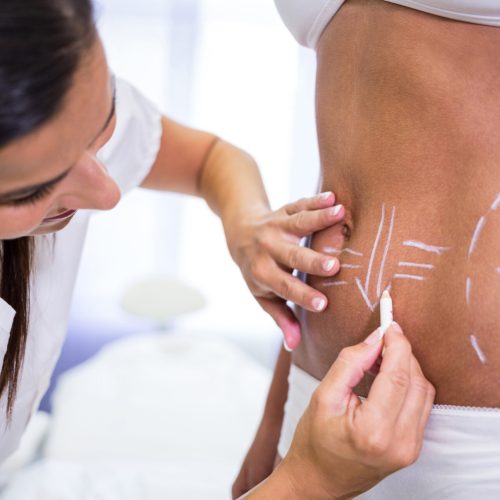
The planned areas are usually marked while the patient is standing. This helps the surgeon evaluate contours and transitions between treated and untreated regions.
4. Anesthesia and Fluid Infiltration
A fluid solution may be placed into the treatment areas before fat removal. This can help prepare the tissue and reduce bleeding.
5. Fat Removal
Small incisions are made, and a cannula is moved through the fatty layer. The removed fat volume and technique vary according to the treatment plan.
6. Compression Garment and Observation
After surgery, a compression garment or supportive bandaging is commonly used to help manage swelling and bruising. Some patients may leave the same day, while others may remain overnight according to the extent of surgery and the treating team’s protocol.
How Long Should International Patients Stay in Turkey?
A typical stay for standard liposuction is around 3–7 days. MedicaRoute’s 360 liposuction page lists a longer procedure duration of approximately 2–4 hours, a stay of around 5–7 days, and return to work in approximately 7–14 days.
A practical travel schedule may include:
| Stage | Approximate Timing |
| Arrival and consultation | Day 1 |
| Surgery | Day 1 or 2 |
| Early observation | Same day or overnight |
| Initial follow-up | During the first few days |
| Return home | Commonly after 3–7 days |
| Longer multi-area procedures | May require a longer stay |
Patients should not book inflexible return flights before the in-person examination and surgical plan are complete.
Liposuction Recovery Timeline
| Time After Surgery | General Expectations |
| First 24–48 hours | Soreness, swelling, bruising, fluid leakage, and rest |
| First week | Compression garment, careful movement, and early follow-up |
| Weeks 2–4 | Swelling begins to settle; contours gradually become clearer |
| Weeks 4–6 | Many routine activities may resume after medical clearance |
| Months 1–3 | A larger part of the swelling resolves |
| Months 3–6 | Final contour becomes easier to assess |
MedicaRoute lists return to work at approximately 3–7 days, full recovery at around 2–6 weeks, and final results at approximately 3–6 months for standard liposuction. Recovery after 360 or multi-area treatment may take longer.
Compression Garments
Compression garments are commonly used after liposuction to support the treated tissues and help control swelling and bruising. NHS guidance states that support garments or compression bandages may be worn continuously for several weeks after surgery.
The garment type and wearing period should be confirmed by the treating team. Patients should also ask whether the garment is included in the package or must be purchased separately.
When Do Results Become Visible?
Early changes may be visible within the first few weeks, but swelling can hide the final contour.
Current MedicaRoute guidance places early results at around 1–2 weeks and the final result at approximately 3–6 months. The appearance can continue changing as swelling decreases and tissues settle.
Fat cells removed during liposuction do not grow back, but remaining fat cells can enlarge if body weight increases. This means the shape can change after treatment.
Possible Risks and Limitations
Possible risks may include:
- Bleeding
- Infection
- Fluid accumulation
- Persistent swelling
- Numbness
- Uneven or lumpy contours
- Skin discoloration
- Asymmetry
- Loose skin
- Blood clots
- Fat embolism
- Injury to deeper structures
- Anesthesia-related complications
- Need for revision surgery
The risk profile can increase when large volumes or multiple areas are treated. Professional guidance notes that additional safety considerations apply when more than approximately five litres of fat are removed.
No provider should promise perfectly smooth skin, complete symmetry, weight loss, or permanent protection from future body changes.
Who Should Think Carefully Before Travelling?
Liposuction abroad may not be practical for every patient. Local evaluation may be more appropriate when:
- There is an unstable medical condition
- The patient has anemia, a bleeding disorder, or another condition that may increase surgical risk
- A hernia or local skin problem needs assessment
- The patient expects liposuction to treat obesity
- Significant loose skin is the main concern
- The patient cannot remain for early follow-up
- Long-term care after returning home is unclear
- The quote does not explain the number of areas or expected fat removal
- The provider promises guaranteed results
Patients should discuss their individual health and surgical suitability with licensed professionals. This article provides general information and is not medical advice.
What Should Be Included in the Quote?
Before booking, patients should check whether the quote includes:
- In-person consultation
- Pre-operative blood tests
- Surgeon’s fee
- Anesthesia
- Operating-facility fees
- Number of treatment areas
- Compression garment
- Medication
- Overnight stay, if required
- Early follow-up
- Hotel accommodation
- Airport and facility transfers
- Translation support
- Treatment for unexpected complications
- Revision policy
The quote should clearly identify whether it covers one area, several areas, or 360-degree treatment.
Questions to Ask Before Booking
International patients should ask:
- Which areas will be treated?
- Is the quote for one area or several areas?
- Which liposuction method will be used?
- How much fat is expected to be removed?
- Will loose skin remain after treatment?
- What type of anesthesia is planned?
- Is an overnight stay expected?
- Is the compression garment included?
- How long should I remain in Turkey?
- When can I fly home?
- What happens if fluid, infection, or contour irregularity develops?
- How will follow-up work after returning home?
- What is included in the revision or complication policy?
Patients travelling to Turkey should also check whether the healthcare facility and any intermediary organization hold an International Health Tourism Authorization Certificate, which is required for organizations providing international medical tourism services.
Final Thoughts
Liposuction in Turkey may be considered for localized fat around areas such as the abdomen, waist, back, thighs, arms, and chin. Current listed package ranges are approximately €1,500–€3,000 for standard liposuction and €1,800–€3,500 for 360 or three-area treatment.
The decision should be based on the treatment areas, skin quality, method, anesthesia, total cost, recovery plan, and follow-up—not only the starting price.
MedicaRoute can help international patients compare itemized liposuction plans and understand what is included before making travel arrangements.