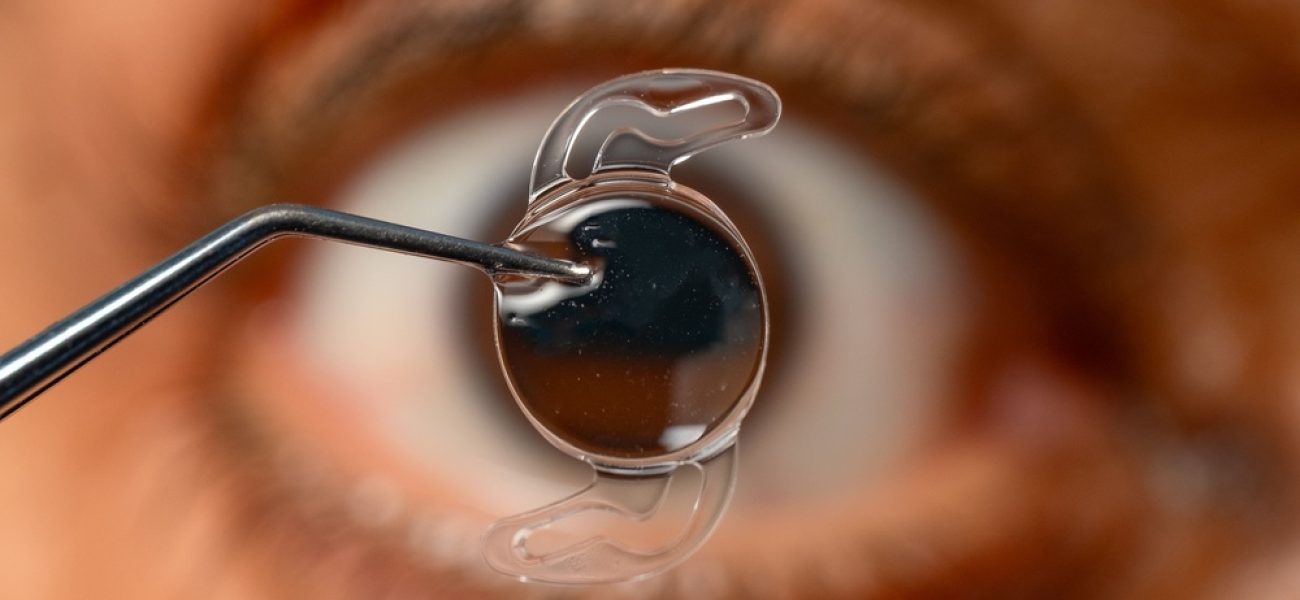

Choosing an intraocular lens is one of the most important decisions before cataract surgery.
The cloudy natural lens removed during cataract surgery is replaced with a clear artificial intraocular lens, or IOL. Unlike the natural lens, the implanted lens normally remains in the eye permanently, so the decision affects how you are likely to use your vision after surgery.
The main options patients commonly hear about are monofocal, multifocal, and trifocal lenses.
The biggest difference is relatively simple: a monofocal lens is designed around one main focusing distance, while multifocal and trifocal lenses are designed to provide useful vision across more than one distance and reduce dependence on glasses. The trade-off is that lenses providing a broader range of vision can also produce visual effects such as halos or glare in some patients.
There is therefore no single “best” cataract lens. The right choice depends on your eyes, lifestyle, expectations, and how willing you are to use glasses after surgery.
Monofocal vs Multifocal vs Trifocal IOLs at a Glance
| Feature | Monofocal IOL | Multifocal IOL | Trifocal IOL |
| Main goal | Clear vision at one selected distance | Useful vision at more than one distance | Distance, intermediate, and near vision |
| Reading glasses | Often still needed | May be needed less often | Designed to reduce dependence on glasses across several distances |
| Computer vision | Depends on chosen focus | Can provide intermediate vision depending on lens design | Intermediate vision is a specific part of the design |
| Halos and glare | Generally less of a concern | More possible | More possible than with a standard monofocal lens |
| Night-driving considerations | Often attractive for patients prioritizing visual quality at distance | Visual effects should be discussed | Halos, glare, and starbursts should be discussed |
| Best suited to | Patients comfortable using glasses for some activities | Patients prioritizing reduced spectacle dependence | Patients wanting a broad range from reading to computer and distance vision |
This table is only a starting point. Modern IOLs come in many designs, and the terms used by manufacturers do not always fit perfectly into three simple categories.
What Is a Monofocal IOL?
A monofocal IOL has one main focusing distance.
According to the American Academy of Ophthalmology, monofocal lenses are the most commonly used type of IOL in cataract surgery. They can be targeted for near, intermediate, or distance vision, although most patients choose clear distance vision and use glasses for reading or close work.
For example, a patient whose implants are targeted for distance may see road signs and television clearly without glasses but still need reading glasses for a book or smartphone.
That does not make the monofocal lens an inferior option. For many patients, predictable distance vision with glasses for near work is exactly what they want.
Why Might Someone Choose a Monofocal Lens?
A monofocal lens may make sense when the priority is straightforward vision at one selected distance rather than maximum freedom from glasses.
It can be particularly appealing to someone who:
- does not mind wearing reading glasses;
- places a high priority on distance vision;
- frequently drives at night;
- has eye conditions that may make a presbyopia-correcting lens less suitable;
- prefers a simpler optical approach.
The AAO notes that presbyopia-correcting lenses can cause glare, halos, and reduced contrast in some patients and that people with certain eye diseases may have poorer visual outcomes with these lenses.
This is one reason an ophthalmologist may recommend a monofocal lens even when a patient initially asks for a premium multifocal or trifocal option.
What Is a Multifocal IOL?
A multifocal IOL is designed to provide useful focus at more than one distance.
Traditional multifocal designs divide incoming light between different optical zones or focal points. The aim is to improve near and distance vision and reduce dependence on glasses.
This can be attractive for patients who want to perform more daily activities without reaching for spectacles.
However, distributing light across several focal points can create trade-offs.
Some patients experience:
- halos around lights;
- glare;
- starbursts;
- reduced contrast in low-light conditions.
These effects may become particularly noticeable while driving at night. The AAO specifically advises that night drivers and people with demanding visual requirements discuss these potential effects carefully before choosing a presbyopia-correcting IOL.
What Is a Trifocal IOL?
A trifocal IOL is essentially a type of multifocal lens designed to provide three useful ranges of vision:
- distance;
- intermediate;
- near.
The intermediate range is especially relevant to modern daily life because it includes activities such as using a computer, viewing a dashboard, or working at approximately arm’s length.
FDA-reviewed clinical data for the PanOptix trifocal IOL showed improved intermediate and near vision with reduced dependence on glasses compared with a monofocal control while maintaining comparable distance visual acuity.
MedicaRoute currently lists options including Alcon PanOptix trifocal lens implantation and Johnson & Johnson Synergy trifocal lens implantation.
The important point is not which brand name sounds more advanced. The ophthalmologist must determine whether that particular lens design suits your eye and visual priorities.
Does a Trifocal Lens Mean You Will Never Need Glasses?
No.
Trifocal and multifocal lenses are intended to reduce dependence on glasses, not guarantee complete freedom from them.
Even after a premium IOL, glasses may occasionally be useful for very small print, demanding close work, particular lighting conditions, or residual refractive error.
The AAO explicitly notes that no IOL can guarantee that a patient will never need glasses again.
Patients should therefore be cautious when cataract surgery is advertised as providing guaranteed “glasses-free vision.”
A realistic goal is reduced dependence on glasses, not a promise that spectacles will never be needed again.
Which Lens Is Better for Reading?
If reducing dependence on reading glasses is a major priority, multifocal or trifocal lenses may offer an advantage over a distance-targeted monofocal lens.
A conventional monofocal lens set for distance usually means reading glasses will still be required for close work.
Multifocal designs provide near as well as distance focus, while trifocal designs aim to cover near, intermediate, and distance vision.
But reading vision alone should not determine the choice.
A patient may gain more near vision while accepting a greater possibility of halos or reduced contrast. The decision is therefore about balancing several types of vision rather than simply maximizing one.
Which Lens Is Better for Computer Work?
Computer use falls mainly into the intermediate range.
This is where trifocal lenses can be particularly attractive because intermediate vision is specifically incorporated into their optical design.
Someone who spends much of the day working at a desktop monitor may therefore value intermediate vision highly.
But this does not automatically mean a trifocal lens is the best option for every office worker. Screen distance, lighting, dry eye, existing eye disease, and tolerance for visual effects all matter.
There are also extended depth-of-focus, or EDOF, lenses that aim to extend the useful range of focus rather than create several distinct focal points. These are another option patients may encounter during an IOL consultation.
Which Lens Is Better for Night Driving?
This is one of the most important questions to discuss before choosing a premium lens.
Multifocal and trifocal optics can produce halos, glare, and starbursts around lights.
FDA data for the PanOptix trifocal lens showed more reports of certain visual disturbances than with the monofocal comparison lens, although many patients still reported high satisfaction and reduced need for glasses.
The AAO similarly notes that pilots, frequent night drivers, and some people with demanding visual requirements may find the optical side effects of presbyopia-correcting IOLs problematic.
Someone who drives frequently at night may therefore value different characteristics from someone whose main priority is reading without glasses.
This is exactly why lens selection should begin with lifestyle rather than the word “premium.”
Are Halos Normal With Multifocal or Trifocal Lenses?
They are a recognized potential effect.
Because multifocal and trifocal lenses divide or redistribute light to create more than one useful focus, some patients notice rings around lights, glare, or starburst patterns.
FDA labeling for trifocal IOLs specifically discusses these visual phenomena.
Some patients adapt well and find these effects minimally bothersome. Others can find them more noticeable, particularly in low-light conditions.
It is impossible to promise before surgery exactly how much a particular individual will notice them.
This is why expectations should be discussed honestly before the lens is selected.
What About Contrast Sensitivity?
Contrast sensitivity describes how well you can distinguish an object from a background with a similar tone, particularly when lighting is poor.
Presbyopia-correcting lenses may reduce contrast sensitivity in some situations compared with a standard monofocal lens. The AAO includes reduced contrast sensitivity among the possible visual effects patients should understand when considering these IOLs.
For some patients, reduced dependence on glasses is worth this trade-off.
For others, particularly those who prioritize night-time visual quality, it may be more important to minimize optical side effects.
There is no correct answer for everyone.
Are Trifocal Lenses Better Than Multifocal Lenses?
Not automatically.
“Multifocal” is a broad category. A trifocal lens is itself a multifocal design, but it is specifically engineered to provide an additional useful intermediate range.
So the comparison should not be understood as an old technology versus a superior new technology.
A patient who wants strong distance and near performance may be satisfied with one design, while someone who spends hours using a computer may place greater value on intermediate vision.
The exact lens model also matters.
Two lenses described as “trifocal” may have different optical designs and characteristics.
What Is a Toric IOL?
Toric is another term patients often see while comparing lenses, but it describes something different.
A toric IOL is designed to correct regular corneal astigmatism.
Toric technology can be incorporated into different types of lenses, including monofocal and some multifocal or EDOF designs.
This means a patient may receive:
- a monofocal toric IOL;
- a multifocal toric IOL;
- a trifocal toric IOL;
- an EDOF toric IOL.
If you have significant astigmatism, ask whether it needs to be corrected as part of the cataract surgery plan rather than assuming that choosing a multifocal or trifocal lens automatically corrects it.
Who May Not Be a Good Candidate for a Multifocal or Trifocal IOL?
The desire to avoid glasses is not enough on its own.
The health of the eye matters.
The AAO notes that patients with eye disease may be at greater risk of unsatisfactory visual outcomes with presbyopia-correcting lenses.
The ophthalmologist may need to consider conditions affecting the:
- cornea;
- retina;
- macula;
- optic nerve;
- ocular surface.
Previous eye surgery can also influence planning.
This is why a detailed eye examination and accurate measurements should come before choosing the lens.
A lens that works very well in one healthy eye may not provide the same result in an eye with another condition.
Does the Most Expensive Lens Give the Best Vision?
Not necessarily.
Premium multifocal and trifocal lenses generally cost more because of their optical technology and their aim of reducing dependence on glasses.
Current MedicaRoute listings, for example, show monofocal IOL implantation at approximately €800–€1,500 and listed trifocal options at approximately €1,500–€3,000.
But higher price does not mean that the lens is medically better for every patient.
For someone who is comfortable wearing reading glasses and strongly prioritizes distance or night-time visual quality, a monofocal lens may be the more appropriate choice.
For someone who values near, intermediate, and distance vision without glasses and accepts the possibility of halos or glare, a trifocal option may be worth considering.
The value comes from matching the lens to the patient, not simply buying the most expensive option.
What Should You Tell Your Ophthalmologist Before Choosing?
A useful lens consultation should include more than your prescription.
Tell the ophthalmologist how you actually use your eyes.
For example:
- Do you drive frequently at night?
- How many hours do you spend on a computer?
- Is reading without glasses very important to you?
- Are you comfortable using reading glasses?
- Do you have astigmatism?
- Have you previously had LASIK or another eye procedure?
- Which visual compromises would bother you most?
The AAO recommends choosing an IOL according to both eye health and individual vision needs.
These lifestyle questions can therefore be just as important as the technical measurements.
What Should You Compare When Having Cataract Surgery Abroad?
International patients should make sure they are comparing the exact lens, not simply the words “premium cataract surgery.”
Before booking, confirm:
- the exact IOL manufacturer and model;
- whether the lens is monofocal, multifocal, trifocal, EDOF, or toric;
- whether one or both eyes are included;
- which preoperative eye measurements are included;
- whether the proposed lens is suitable for your eye health;
- what follow-up is provided after surgery;
- whether the lens choice changes the total price.
MedicaRoute’s ophthalmology treatment hub includes cataract, IOL, and other eye-treatment options, while patients can also request a personalized treatment plan and quote before comparing offers.
For a broader overview of cataract surgery procedures, treatment costs, lens options, and recovery expectations, read our Cataract Surgery in Turkey guide.
Planning for postoperative care is just as important as choosing the right lens. For more information about vision changes, eye drops, follow-up appointments, and travelling after surgery, read our Cataract Surgery Recovery Timeline guide.
Monofocal vs Multifocal vs Trifocal: Which Should You Choose?
A simple way to think about the decision is to start with what matters most to you.
A monofocal lens may be attractive if you want strong vision at one chosen distance, are comfortable using glasses for other tasks, or place a high priority on minimizing optical effects such as halos.
A multifocal lens may be suitable if reducing dependence on glasses at more than one distance is important and you understand the potential visual trade-offs.
A trifocal lens may be attractive if near, intermediate, and distance vision are all important—for example, if you regularly move between reading, computer work, and distance activities.
But none of these choices should be made from a comparison table alone.
Eye health, measurements, astigmatism, previous surgery, occupation, night-driving habits, and expectations all affect the decision.
The Bottom Line
Monofocal, multifocal, and trifocal IOLs are not simply basic, better, and best versions of the same lens.
They are different solutions for different visual priorities.
Monofocal lenses provide one main focusing distance and commonly require glasses for other ranges. Multifocal lenses aim to reduce spectacle dependence across more than one distance. Trifocal lenses extend that concept by specifically providing near, intermediate, and distance focus.
The extra range of vision offered by presbyopia-correcting lenses can come with trade-offs such as glare, halos, starbursts, or reduced contrast, particularly in low-light conditions.
For this reason, the right question is not “Which IOL is the most advanced?”
It is “Which lens gives me the balance of distance vision, reading vision, computer vision, night vision, and glasses independence that best fits my life?”