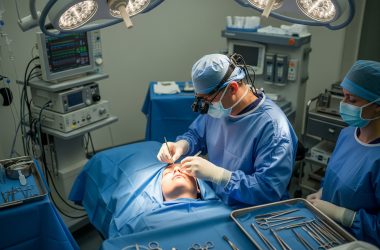


LASIK eye surgery, PRK, and ReLEx SMILE eye surgery are refractive procedures used to reduce dependence on glasses or contact lenses.
All three methods change the shape of the cornea so light can focus more accurately on the retina. The main differences are how the surgeon accesses and reshapes the corneal tissue, how quickly vision recovers, and which prescriptions and eye characteristics each method can treat.
None of these procedures is automatically better for every patient. The appropriate method can only be determined after measuring the prescription, corneal thickness and shape, tear production, pupil size, and general eye health.
LASIK vs PRK vs SMILE at a Glance
| Feature | LASIK | PRK | SMILE |
| Full name | Laser-Assisted In Situ Keratomileusis | Photorefractive Keratectomy | Small Incision Lenticule Extraction |
| Main method | A corneal flap is created before laser reshaping | Surface cells are removed before laser reshaping | A small piece of corneal tissue is removed through a short incision |
| Laser type | Femtosecond laser and/or flap instrument, followed by excimer laser | Excimer laser | Femtosecond laser |
| Corneal flap | Yes | No | No large flap |
| Surface layer removal | No | Yes | No |
| Early discomfort | Commonly mild | Usually more noticeable during the first few days | Commonly mild |
| Early visual recovery | Usually fastest | Usually slowest | Often relatively quick but may be slower than LASIK initially |
| Bandage contact lens | Usually not required | Commonly used temporarily | Usually not required |
| Published MedicaRoute package range | €1,000–€2,500 | €800–€1,500 | €1,000–€2,500 |
| Typical stay in Turkey | Around 3–7 days | Around 3–7 days | Around 3–7 days |
| Long-term follow-up | Required | Required | Required |
MedicaRoute’s current laser eye surgery guide lists a procedure duration of approximately 15–30 minutes, local anesthesia, and a general stay of around 3–7 days. Its cost guide, last updated on 2 January 2026, lists approximately €1,000–€2,500 for LASIK, €800–€1,500 for PRK, and €1,000–€2,500 for ReLEx SMILE packages.
Patients should confirm whether a quote covers one eye or both eyes and whether examinations, medication, accommodation, transfers, and follow-up are included.
What Is LASIK?
LASIK reshapes the cornea beneath a thin flap.
During the procedure:
- Numbing eye drops are applied.
- A thin corneal flap is created.
- The flap is lifted.
- An excimer laser reshapes the underlying corneal tissue.
- The flap is returned to its original position.
The flap is commonly created using a femtosecond laser, although some systems use a mechanical device called a microkeratome. The FDA describes LASIK as a procedure that permanently changes the corneal shape by lifting a flap and applying computer-controlled laser pulses to the underlying tissue.
LASIK may be used to treat:
- Myopia, or short-sightedness
- Hyperopia, or long-sightedness
- Astigmatism
The exact prescription range depends on the laser system, corneal measurements, regulatory approval, and individual assessment.
What Is PRK?
PRK is a surface laser procedure. It reshapes the cornea without creating a flap.
During PRK:
- Numbing eye drops are applied.
- The corneal epithelium, which is the thin surface-cell layer, is removed.
- An excimer laser reshapes the underlying corneal tissue.
- A temporary bandage contact lens is placed over the eye.
- The surface layer gradually grows back.
The bandage lens protects the cornea while the epithelial layer heals. This commonly takes several days, during which blurred vision, watering, light sensitivity, and discomfort may occur.
Because PRK does not create a flap, it may be discussed when avoiding a corneal flap is important. However, PRK still removes corneal tissue, and the cornea must still have suitable thickness, shape, and health.
What Is SMILE?
SMILE stands for Small Incision Lenticule Extraction.
During SMILE:
- Numbing eye drops are applied.
- A femtosecond laser creates a thin, disc-shaped piece of tissue inside the cornea.
- The laser creates a small opening in the corneal surface.
- The surgeon removes the tissue, called a lenticule, through the opening.
- Removing the lenticule changes the corneal shape.
Unlike LASIK, SMILE does not require a large corneal flap. Unlike LASIK and PRK, it does not use an excimer laser to remove tissue from the corneal surface.
SMILE is mainly used for myopia with or without astigmatism. Approved prescription ranges and indications vary according to the device and country.
Main Difference 1: Corneal Access
The clearest difference is how each procedure reaches the tissue that needs reshaping.
LASIK
LASIK creates a relatively wide flap that remains attached by a hinge. The flap is lifted during treatment and replaced afterward.
PRK
PRK removes the surface epithelium. The tissue beneath is reshaped directly, and the surface cells then regrow.
SMILE
SMILE creates a small incision and removes an internal lenticule without producing a large flap or removing the entire surface-cell layer.
| Corneal Change | LASIK | PRK | SMILE |
| Large flap created | Yes | No | No |
| Surface epithelium removed | No | Yes | No |
| Internal lenticule removed | No | No | Yes |
| Excimer laser used | Yes | Yes | No |
| Femtosecond laser used | Commonly | Not normally for standard PRK | Yes |
Main Difference 2: Visual Recovery
LASIK usually provides the quickest early visual recovery.
Many LASIK patients notice significant improvement by the following day, although vision can still fluctuate and the eye must be examined before driving or returning to normal activities. The American Academy of Ophthalmology states that many patients can return to work and driving after their next-day review, while PRK generally requires longer healing.
SMILE also commonly provides relatively quick visual recovery, but sharpness may develop over several days rather than immediately. AAO educational material notes that early visual recovery can be slower after SMILE than after LASIK.
PRK usually has the slowest early recovery because the surface epithelium must regrow. Vision may be blurred during the first several days and can continue fluctuating for weeks.
A future laser eye surgery recovery timeline could compare vision changes, discomfort, work, driving, exercise, and final stabilization after each method.
Main Difference 3: Early Discomfort
Early discomfort is usually more noticeable after PRK.
During the first two to four days, PRK patients may experience:
- Burning or stinging
- Watering
- Light sensitivity
- A foreign-body sensation
- Blurred vision
- Difficulty keeping the eyes open comfortably
The bandage contact lens remains in place while the epithelium heals and should only be removed according to the ophthalmologist’s instructions.
LASIK and SMILE patients may also experience dryness, irritation, watering, or light sensitivity, but the absence of a healing surface wound usually makes the first few days more comfortable than PRK.
Main Difference 4: The Corneal Flap
LASIK is the only one of the three procedures that creates a large corneal flap.
The flap allows rapid visual recovery but introduces flap-specific risks, including:
- Flap displacement
- Wrinkling or folds
- Epithelial cells growing beneath the flap
- Inflammation beneath the flap
- Problems after direct trauma to the eye
PRK and SMILE avoid a large flap. This may be relevant for selected people with occupations or activities that carry a higher risk of eye trauma. However, avoiding a flap does not remove the other risks of refractive surgery.
Main Difference 5: Prescription Range
LASIK and PRK can be used across a broad range of myopia, hyperopia, and astigmatism, depending on the approved device and the patient’s corneal measurements.
SMILE’s established indication is generally narrower and mainly focuses on myopia with or without astigmatism. FDA patient information describes SMILE as a surgical treatment for nearsightedness and astigmatism.
A person being unsuitable for one method does not automatically mean another method is safe. Very high prescriptions may leave insufficient corneal tissue after laser treatment, while some patients may be evaluated for glasses, contact lenses, or an implantable lens instead.
Main Difference 6: Dry-Eye Symptoms
Dry-eye symptoms can occur after all three procedures.
Possible symptoms include:
- Burning
- Grittiness
- Fluctuating vision
- Light sensitivity
- Tired eyes
- Difficulty wearing makeup or using screens comfortably
LASIK creates a wide flap and affects corneal nerves across a larger area. SMILE uses a smaller incision and may preserve more surface nerves, although it can still cause temporary or persistent dry-eye symptoms.
PRK does not create a flap, but the surface epithelium and corneal nerves still require healing.
The FDA advises patients that LASIK can cause new dry-eye symptoms or worsen existing dry eye and that symptoms can become chronic in some cases.
Pre-existing dry eye should therefore be assessed before any refractive procedure.
Main Difference 7: Enhancement or Retreatment
An enhancement is an additional procedure intended to refine the remaining prescription.
After LASIK, the original flap may sometimes be lifted again, or a surface procedure may be used.
After PRK, another surface-laser procedure may occasionally be considered after the eye has stabilized.
After SMILE, possible enhancement options may include PRK, LASIK-type treatment, or another approach selected according to the cornea and original surgical plan.
Retreatment is not always possible. The cornea must still have enough safe tissue, and the potential benefit must outweigh the additional risk.
The NHS lists under-correction, over-correction, and the possible need for a second operation among the recognized outcomes of refractive surgery.
Cost of LASIK, PRK, and SMILE in Turkey
MedicaRoute currently lists the following all-inclusive planning ranges:
| Procedure | Published Package Range |
| LASIK eye surgery | €1,000–€2,500 |
| PRK | €800–€1,500 |
| ReLEx SMILE eye surgery | €1,000–€3,000 |
| General laser eye surgery | €1,000–€2,500 |
These listed prices may include the medical procedure, accommodation, and private transfers, but the exact contents of each package must be confirmed in writing.
The final cost may be affected by:
- Whether the price covers one or both eyes
- Pre-operative examinations
- Corneal topography and tomography
- Dry-eye testing
- Laser platform
- Custom or wavefront-guided planning
- Surgeon and facility fees
- Medication and eye drops
- Follow-up appointments
- Enhancement policy
- Treatment of complications
The cheapest method is not necessarily the method that is anatomically appropriate.
What Additional Medical Costs May Arise After Assessment?
A preliminary LASIK, PRK, or SMILE quote may change after the ophthalmologist measures the prescription, corneal thickness and shape, tear film, pupil size, eye pressure, and overall eye health. These are additional medical costs rather than accommodation, transfers, or other travel expenses.
| Possible Additional Medical Cost | Why It May Be Required |
| Repeat refraction or corneal measurements | When the prescription is unstable, measurements are inconsistent, or contact-lens wear has temporarily affected the corneal shape |
| Corneal topography or tomography | To identify irregular astigmatism, keratoconus, contact-lens-related corneal changes, or another condition that may affect suitability |
| Dry-eye and tear-film testing | When dryness, burning, fluctuating vision, contact-lens intolerance, or an unstable tear film requires further assessment |
| Treatment of dry eye or eyelid inflammation | When the ocular surface must be stabilized before reliable measurements or surgery can proceed |
| Dilated retinal examination or specialist assessment | When high myopia, visual symptoms, previous retinal problems, or examination findings require further evaluation |
| Additional medical or specialist clearance | When an existing condition, previous eye surgery, or current medication requires further assessment |
| A different refractive procedure | When the cornea, prescription, dry-eye findings, or eye anatomy makes the originally quoted LASIK, PRK, or SMILE method unsuitable |
| Bandage contact lens and additional early reviews after PRK | When these services are required but are not included in the original package |
| Additional postoperative medication or examinations | When healing, inflammation, dryness, eye pressure, or visual recovery requires closer monitoring |
| Enhancement or retreatment | When a residual prescription remains after the result has stabilized and further surgery is considered medically appropriate |
| Treatment of a complication | When infection, inflammation, corneal haze, flap-related problems, or another postoperative concern requires additional care |
A complete refractive-surgery assessment should confirm that the prescription is stable and evaluate factors such as corneal structure and tear-film health before a procedure is selected. Corneal topography is used to identify irregularities and previously undetected corneal disease that may make the original treatment plan inappropriate.
The FDA also notes that additional surgery should not be considered until the prescription has stopped changing. An enhancement may therefore require further measurements, follow-up, and a separate medical charge rather than being automatically included in the initial operation price.
Patients should ask which diagnostic tests, postoperative eye drops, PRK bandage lenses, follow-up examinations, alternative procedures, and enhancement terms are included in the preliminary quote. The final procedure and total medical cost should be confirmed only after the full in-person eye examination.
What Should Be Included in the Quote?
An itemized quote should explain whether it includes:
- Ophthalmologist examination
- Prescription testing
- Dilated eye examination
- Corneal thickness measurement
- Corneal topography or tomography
- Tear-film and dry-eye assessment
- Pupil measurement
- Surgery for one or both eyes
- Laser and operating-facility fees
- Medication and eye drops
- Bandage contact lenses for PRK
- Next-day examination
- Follow-up before departure
- Accommodation
- Transfers
- Remote follow-up
- Enhancement terms
- Complication policy
Patients should also ask whether an advertised “laser package” may change after the full in-person examination.
Pre-Operative Eye Examination
A complete eye examination is necessary before choosing LASIK, PRK, or SMILE.
The assessment commonly includes:
- Current prescription
- Stability of the prescription
- Corneal thickness
- Corneal curvature and shape
- Signs of keratoconus or corneal weakness
- Tear production
- Pupil size
- Eye pressure
- Retina and optic-nerve health
- Previous eye surgery
- General medical history
- Current medication
The FDA checklist identifies prescription stability, corneal thickness, pupil size, tear production, medical conditions, medications, and existing eye conditions as important parts of LASIK assessment.
Contact lenses can temporarily change the shape of the cornea. Patients may therefore be asked to stop wearing them before measurements are taken. The required period varies according to the type of contact lens and the ophthalmologist’s protocol.
A future guide on how to prepare for laser eye surgery abroad could explain contact-lens removal, medical records, examinations, travel dates, and follow-up planning.
Who May Not Be Suitable for Laser Eye Surgery?
Suitability cannot be determined from age or prescription alone.
Laser correction may not be appropriate, or may need to be postponed, when there is:
- An unstable prescription
- Keratoconus or an irregular corneal shape
- Insufficient corneal thickness
- Significant dry eye
- Active eye infection or inflammation
- Uncontrolled autoimmune or systemic illness
- Medication that may affect healing
- Pregnancy-related prescription changes
- Unrealistic expectations
- Another eye condition affecting vision
The FDA also advises patients to consider occupational restrictions, very large pupils, high prescriptions, chronic illness, and the possibility that reading glasses may still be needed later.
Presbyopia, the age-related loss of near focus, continues to develop even after successful distance-vision correction. Laser treatment does not stop normal ageing of the eye.
Recovery Comparison
| Recovery Stage | LASIK | PRK | SMILE |
| First day | Blurring, watering, irritation | Blurring, discomfort, light sensitivity | Blurring, watering, mild irritation |
| First 2–4 days | Vision often improves quickly | Surface healing and bandage lens | Vision generally improves over several days |
| Return to desk work | Sometimes after next-day review | Commonly several days or longer | Often within several days |
| Driving | Only after examination and medical clearance | Usually later than LASIK | After examination and medical clearance |
| Visual fluctuation | Possible for weeks | May continue for several weeks or months | Possible during early healing |
| Final stabilization | Several weeks to months | Commonly takes longer | Several weeks to months |
General MedicaRoute guidance lists return to work at approximately 3–7 days, first results within 1–2 weeks, and final results over 3–6 months for laser eye surgery. Individual recovery can differ substantially between methods and patients.
Patients should not drive home on the day of surgery. The NHS advises waiting for medical guidance before driving again and avoiding night driving until vision has recovered sufficiently.
How Long Should International Patients Stay in Turkey?
MedicaRoute lists a general stay of approximately 3–7 days for LASIK, PRK, and SMILE-related laser treatment.
A practical schedule may include:
| Stage | Approximate Timing |
| Arrival | Before the examination |
| Full eye assessment | Day 1 |
| Procedure | After suitability is confirmed |
| First postoperative review | Usually the following day |
| Additional PRK reviews | May be required while the surface heals |
| Bandage-lens removal after PRK | According to the healing assessment |
| Return home | After medical clearance |
PRK patients may require more early follow-up because the epithelium must be checked until it has healed. AAO guidance recommends early and repeated review after PRK until epithelial healing is complete.
International patients should not plan to fly home immediately after the procedure without an in-person postoperative examination.
Possible Side Effects and Risks
LASIK, PRK, and SMILE are surgical procedures and can produce side effects or complications.
Possible concerns include:
- Dry eyes
- Blurred or fluctuating vision
- Glare
- Halos around lights
- Starbursts
- Ghost images
- Reduced night-vision quality
- Light sensitivity
- Under-correction
- Over-correction
- Regression of the correction
- Infection
- Inflammation
- Corneal haze
- Irregular astigmatism
- Corneal weakening or ectasia
- Need for additional surgery
- Loss of best-corrected vision
- Rarely, severe permanent visual loss
The NHS lists glare, halos, starbursts, ghost images, blurred vision, soreness, under- or over-correction, and possible additional surgery among the recognized outcomes of laser and lens procedures.
The FDA and AAO also warn that some patients may develop persistent dry eye, poor night vision, glare, halos, double vision, or worse vision than before surgery even when wearing glasses.
A future LASIK risks and side effects article could explore temporary symptoms, persistent complications, retreatment, and warning signs in greater detail.
Warning Signs After Surgery
Patients should receive clear emergency contact instructions before leaving the treatment facility.
Prompt assessment may be needed for:
- Increasing eye pain
- Sudden loss or reduction of vision
- Worsening redness
- Discharge
- Increasing light sensitivity
- Injury or rubbing to the treated eye
- A displaced bandage lens after PRK
- New flashes or a sudden increase in floaters
- A dark curtain or shadow across the vision
The NHS advises urgent assessment for sudden floaters, flashes, a curtain-like shadow, or sudden blurred vision.
Which Procedure Has the Fastest Recovery?
LASIK generally has the fastest early visual recovery.
SMILE usually follows with relatively quick recovery but can take several days for vision to sharpen. PRK normally requires the longest initial recovery because its surface layer must regrow.
However, the fastest recovery does not establish which procedure is safest or most appropriate for a particular eye.
Which Procedure Is Better for Thin Corneas?
No single answer applies to every patient.
PRK is sometimes discussed when avoiding a LASIK flap could preserve more of the front corneal structure. However, PRK still removes tissue, and an excessively thin, irregular, or structurally weak cornea may make all corneal laser procedures unsuitable.
SMILE and LASIK also have minimum tissue requirements based on the prescription, corneal thickness, planned treatment depth, and remaining corneal strength.
Corneal tomography and individualized calculations are more important than a general statement that one technique is “for thin corneas.”
Which Procedure Is Better for Active Lifestyles?
SMILE or PRK may be discussed when avoiding a LASIK flap is considered important, particularly where direct eye trauma is a realistic occupational or sporting concern.
AAO patient guidance notes that SMILE may be considered for people with active lifestyles who prefer to avoid a LASIK flap.
This does not mean patients can immediately return to contact sports after SMILE or PRK. Exercise, swimming, makeup, rubbing the eyes, dusty environments, and contact sports should only resume according to the ophthalmologist’s instructions.
Questions to Ask Before Choosing LASIK, PRK, or SMILE
Patients should ask:
- Which refractive error do I have?
- Has my prescription been stable?
- What are my corneal thickness and tomography results?
- Is there any sign of keratoconus or corneal weakness?
- Do I have dry-eye disease?
- Why is this specific method being recommended?
- What are the alternatives?
- Does the price cover one eye or both eyes?
- Which laser system will be used?
- Who will perform the procedure?
- How often does the surgeon perform this method?
- How long should I remain in Turkey?
- When will my first postoperative examination take place?
- When may I drive and fly?
- Who will manage follow-up after I return home?
- What happens if the intended correction is not achieved?
- Is enhancement included in the quote?
- What happens if I develop persistent dry eye or night-vision problems?
- Which examination records will I receive?
The FDA recommends asking about surgeon experience, equipment, follow-up, expected limitations, and possible costs related to side effects or retreatment.
Final Thoughts
LASIK, PRK, and SMILE all reshape the cornea but use different surgical methods.
LASIK creates a flap and generally offers the quickest early visual recovery. PRK removes the surface epithelium, avoids a flap, and usually involves more discomfort and slower early healing. SMILE removes a lenticule through a small incision without creating a large flap, but its treatment range may be narrower than LASIK or PRK.
Current MedicaRoute listings show package ranges of approximately €1,000–€2,500 for LASIK, €800–€1,500 for PRK, and €1,000–€2,500 for ReLEx SMILE. Patients should confirm whether these prices cover one or both eyes and what examinations, travel services, follow-up, and retreatment terms are included.
The procedure should be selected after a complete ophthalmological examination rather than according to price, recovery speed, or the name of the laser alone.
MedicaRoute can help international patients compare itemized LASIK, PRK, and SMILE plans and review the proposed examination, treatment method, travel schedule, and follow-up arrangements before booking.