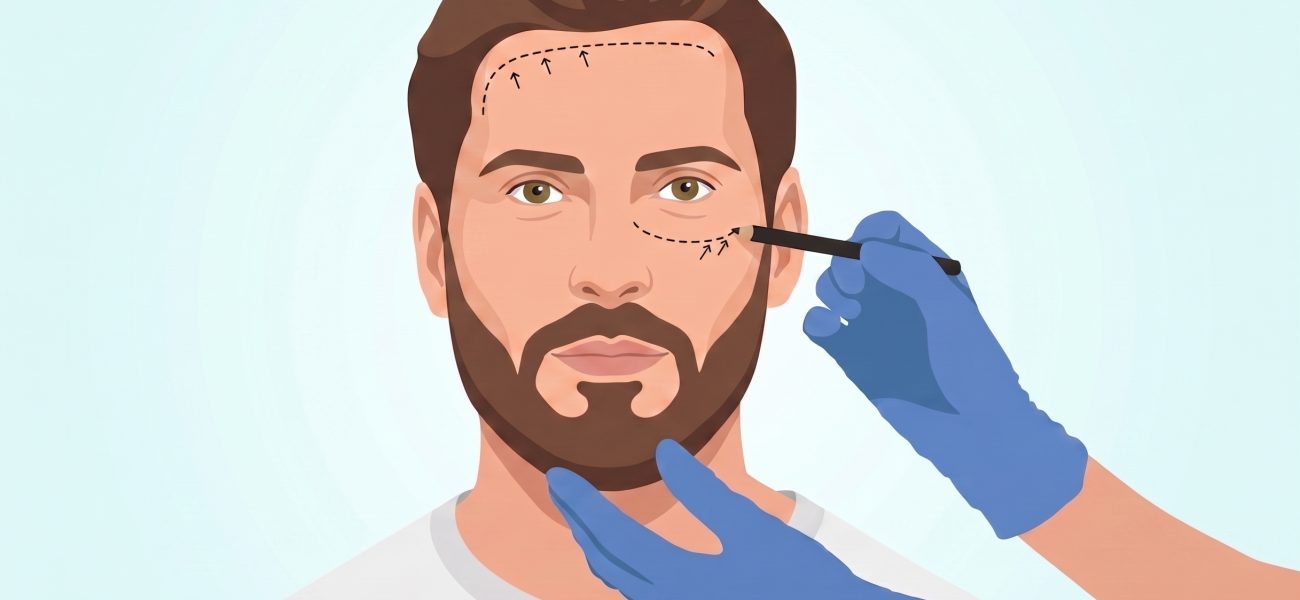

A facelift, medically known as rhytidectomy, is a surgical procedure designed to improve visible signs of facial and neck aging. It can address loose skin, jowls, changes in the jawline and deeper facial folds by repositioning facial tissues and removing excess skin. A facelift does not stop the aging process or fundamentally change a person’s appearance; its aim is to create a more refreshed facial contour.
Turkey has become one of the destinations considered by international patients seeking facial plastic surgery. The combination of experienced surgeons, clinics accustomed to international patients and treatment packages that may include travel-related services makes it possible to organize surgery and early follow-up within one trip. However, price alone should never determine where or with whom a facelift is performed.
For patients considering facelift surgery in Turkey, understanding what the procedure involves, how much it may cost and what recovery actually looks like is essential before comparing clinics.
What Is a Facelift?
A facelift is primarily intended to improve age-related changes in the lower and middle areas of the face. Depending on the surgical plan, it may address:
- sagging facial skin;
- jowls along the jawline;
- deep folds between the nose and mouth;
- descended facial tissues;
- loss of definition around the jaw;
- loose skin around the lower face and neck.
The American Society of Plastic Surgeons explains that facelift surgery can reposition facial tissues and improve visible signs of aging in the face and neck. Procedures such as eyelid surgery, brow lift or facial fat transfer may also be performed separately or alongside a facelift when appropriate.
A facelift should not be confused with treatments such as dermal fillers, Botox or thread lifting. These treatments may address different cosmetic concerns, but they do not reproduce the tissue repositioning performed during surgical facelift surgery.
How Much Does a Facelift Cost in Turkey?
There is no single national price for facelift surgery in Turkey.
The final cost depends on the surgical technique, surgeon, hospital, anaesthesia, complexity of the case, whether the neck is treated and whether additional procedures are performed at the same time.
MedicaRoute’s clinic-listing data updated in January 2026 shows indicative prices of approximately €2,000–€4,500 for facelift surgery, €1,500–€3,000 for a mini facelift and €2,500–€5,000 for a deep plane facelift. Broader 2026 Turkish market price guides report that more complex or combined facelift procedures can reach approximately €8,500, demonstrating why patients may receive considerably different quotations for procedures that are all described simply as a “facelift.”
| Procedure | Indicative MedicaRoute Price Range |
| Facelift | €2,000–€4,500 |
| Mini facelift | €1,500–€3,000 |
| Deep plane facelift | €2,500–€5,000 |
| Neck lift | €1,500–€3,000 |
These figures should be treated as a cost guide rather than a guaranteed treatment price. A personalized quotation can only be prepared after the surgeon assesses facial anatomy, skin laxity, previous procedures and the extent of surgery required.
Why Can Two Facelift Quotes in Turkey Be Very Different?
Two clinics may use the word “facelift” while proposing significantly different operations.
One quotation may involve a relatively limited lower-face procedure, while another may involve extensive tissue repositioning, neck surgery and additional facial procedures.
The main factors affecting the cost include:
- facelift technique;
- surgeon’s experience;
- complexity of the operation;
- hospital and operating-room fees;
- anaesthesia;
- length of hospital stay;
- whether a neck lift is included;
- additional procedures such as eyelid surgery or facial fat transfer;
- accommodation and transfers included in an international-patient package;
- postoperative examinations and aftercare.
This is why patients should compare the actual treatment plan rather than simply choosing the lowest advertised facelift price.
What Is Usually Included in a Facelift Package in Turkey?
Package structures vary considerably between clinics.
For international patients, a quotation may combine the medical treatment with practical services such as accommodation and local transfers. Current MedicaRoute listings, for example, distinguish treatment pricing and international-patient package services, while other Turkish providers advertise packages that combine surgery, hospital care, accommodation and transfers.
Before paying a deposit, patients should request a written breakdown confirming whether the quotation includes:
- surgeon’s fee;
- anaesthetist’s fee;
- hospital and operating-room charges;
- preoperative examinations;
- medication;
- hospital stay;
- postoperative appointments;
- hotel accommodation;
- airport and clinic transfers;
- translation or patient-coordination services.
International flights, travel insurance, additional nights caused by delayed recovery and future treatment after returning home may not be included.
The important number is therefore not simply the advertised package price but the total expected cost of the complete treatment journey.
Which Types of Facelift Are Available?
Facelift is an umbrella term rather than one single surgical technique.
Common approaches include traditional or SMAS facelift surgery, deep plane facelift surgery and more limited procedures commonly described as mini facelifts or short-scar facelifts.
The correct technique depends on facial anatomy, tissue laxity, age-related changes and the areas the patient wants to improve.
A younger patient with relatively limited lower-face laxity may not require the same operation as someone with substantial jowling, neck laxity and deeper facial descent.
For this reason, patients should ask the surgeon exactly which technique is being proposed rather than relying only on the word “facelift.”
To understand how these surgical techniques differ, including their approach to deeper facial tissues, read our Deep Plane vs SMAS Facelift comparison guide.
What Happens During Facelift Surgery?
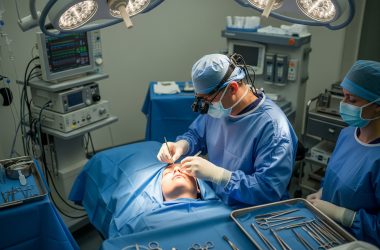
Although the exact operation varies according to technique, facelift surgery commonly involves incisions beginning around the hairline and continuing around the natural contours of the ear. If the neck is also being treated, additional access beneath the chin may sometimes be required.
The surgeon then works with the facial tissues beneath the skin according to the selected technique. Deeper tissues may be repositioned or tightened, facial fat may be redistributed and excess skin is removed before the incisions are closed.
Facelift and neck-lift procedures generally take several hours. The British Association of Aesthetic Plastic Surgeons describes an approximate operating time of two to five hours, while the NHS notes that many facelift procedures take around two to three hours. Duration depends on the technique and whether other procedures are added.
Is Facelift Surgery Performed Under General Anaesthesia?
Facelift surgery may be performed under general anaesthesia or, in some cases, local anaesthesia combined with sedation. The anaesthetic plan depends on the procedure, surgeon, facility and patient’s medical circumstances.
International patients should know in advance where the operation will take place, who will administer the anaesthesia and whether an overnight hospital stay is planned.
Who Is a Good Candidate for a Facelift?
Age alone does not determine whether someone needs a facelift.
The condition of the skin and deeper facial tissues is generally more important than a specific birthday.
According to the American Society of Plastic Surgeons, suitable candidates generally include healthy individuals without medical conditions that significantly interfere with healing, non-smokers and people who have realistic expectations about what surgery can achieve.
A consultation should assess factors such as:
- facial and neck anatomy;
- degree of skin laxity;
- previous facial procedures;
- smoking and nicotine use;
- medications and supplements;
- medical history;
- healing risk;
- expectations from surgery.
Patients should also tell their surgeon about previous fillers, threads, facial surgery and other aesthetic procedures because these may be relevant to surgical planning.
What Can a Facelift Improve?
Facelift surgery is particularly effective for structural changes caused by aging and tissue descent.
Patients commonly consider it because of concerns such as jowls, a less defined jawline, sagging cheeks or loose lower-face skin.
However, a facelift is not designed to correct every sign of facial aging.
Fine surface wrinkles, pigmentation and changes in skin texture may require different treatments. Loss of facial volume may sometimes be addressed with fat transfer or other complementary procedures. Brow or eyelid aging may require separate surgery.
The goal should therefore be a treatment plan based on the patient’s individual facial changes rather than performing the same combination of procedures for everyone.
Facelift and Neck Lift: Are They the Same Procedure?
No.
A facelift and a neck lift target related but different anatomical areas.
Facelift surgery primarily addresses the face and jawline, while neck-lift surgery focuses more directly on loose neck skin, excess tissue and changes in the underlying neck structures.
However, aging of the lower face and neck frequently occurs together. Surgeons may therefore recommend treating both regions during the same operation when this provides better continuity between the jawline and neck. BAAPS notes that facelift and neck-lift surgery may be performed individually or together depending on the patient’s anatomy.
Patients comparing quotations should specifically ask whether neck treatment is included.
What Is Facelift Recovery Like?
Facelift recovery is gradual rather than immediate.
Swelling, bruising, tightness and temporary numbness are expected during the early healing period. Swelling and bruising are often most noticeable during the first several days and then gradually improve.
The NHS gives a general recovery period of approximately two to four weeks and notes that visible bruising commonly remains for at least two weeks. BAAPS similarly states that many patients can return to work and social activities within a couple of weeks, although individual healing varies.
This does not mean that the face has completely healed after two weeks.
Residual swelling, tightness and changes in sensation may persist considerably longer. The final result develops gradually as tissues settle.
For a more detailed look at swelling, scar healing, and travel planning after surgery, read our Facelift Recovery Timeline guide.
When Will the Final Facelift Result Be Visible?
Patients should not judge a facelift result during the first days or weeks after surgery.
The face can initially look swollen, tight or uneven as healing progresses.
The NHS states that the final effect of facelift surgery may take approximately six to nine months to become apparent. BAAPS also advises that the final result cannot reliably be assessed for around six to nine months.
Very minor swelling or changes in sensation may continue improving beyond the stage when the patient already looks socially recovered.
How Long Should You Stay in Turkey After a Facelift?
International patients should plan their stay around medical follow-up rather than the earliest available return flight.
Early postoperative appointments may be required to inspect the incisions, change dressings and remove drains or sutures when necessary. BAAPS states that facial dressings may remain for one or two days and that sutures are commonly removed after approximately seven or eight days, while the NHS describes suture removal at approximately seven to fourteen days depending on the procedure.
The appropriate travel date depends on the extent of surgery, recovery progress, flight duration and individual risk factors.
Patients should therefore receive medical clearance from their surgeon before flying home rather than choosing a return date solely according to the advertised package length.
What Are the Risks of Facelift Surgery?
Facelift surgery is an operation and carries potential complications.
Recognized risks include:
- bleeding or haematoma;
- infection;
- delayed wound healing;
- noticeable or thickened scars;
- temporary or persistent changes in sensation;
- facial nerve injury;
- facial asymmetry;
- hair loss around incision areas;
- complications associated with anaesthesia;
- blood clots associated with surgery.
The NHS and BAAPS both emphasize that patients should understand the possible complications before consenting to surgery.
The presence of risk does not mean that a complication will occur, but patients should know how complications would be managed if they developed after returning to their home country.
How to Choose a Facelift Surgeon in Turkey
Choosing the surgeon is more important than choosing a package based on hotel quality or airport transfers.
Patients should verify the surgeon’s medical training and specialty and ask how frequently the surgeon performs the specific type of facelift being proposed.
The Turkish Society of Plastic Reconstructive and Aesthetic Surgeons provides a public physician search directory that can be used as one source for checking practitioners in the specialty.
Questions worth asking include:
- What type of facelift do you recommend for me, and why?
- How frequently do you perform this procedure?
- Where will the operation be performed?
- Who will provide the anaesthesia?
- Is a neck lift included?
- What exactly is included in the quotation?
- How long should I remain in Turkey?
- Who will examine me before I fly home?
- How is aftercare handled after I return to my country?
- What happens if I develop a complication?
A surgeon should be able to explain not only what will be done but why the proposed operation is suitable for that particular patient’s anatomy.
How to Check a Clinic for Medical Tourism in Turkey
International patients can also check whether healthcare facilities and intermediary organizations hold the appropriate authorization for international health tourism.
Türkiye’s Ministry of Health maintains official lists of authorized healthcare facilities and intermediary organizations through its Health Tourism Department. The Ministry’s website states that its authorized-facility lists were updated on July 2, 2026.
This type of verification should form part of the research process when choosing a clinic in Turkey alongside reviewing the individual surgeon, hospital and treatment plan.
Online reviews and social-media photographs can be useful for understanding previous patient experiences, but they should not replace professional credential checks.
Is a Cheap Facelift in Turkey a Good Deal?
Potentially, but the lowest price should not automatically be considered the best value.
A lower quotation may reflect a smaller procedure or fewer services. It may also exclude items included in another clinic’s quotation.
Patients should be cautious when they cannot clearly determine:
- who will perform the surgery;
- which facelift technique is included;
- where the operation will take place;
- what anaesthesia will be used;
- what postoperative care is provided;
- whether the neck is included;
- how complications will be handled.
The safest comparison is between complete treatment plans rather than headline prices.
What Should You Arrange Before Travelling to Turkey?
Before travelling, international facelift patients should have a written treatment plan and enough information to understand what will happen before, during and after surgery.
Important preparations include:
- completing the requested medical assessment;
- informing the surgeon about all medications and supplements;
- following instructions about smoking and nicotine;
- confirming the exact procedure;
- checking what the package includes;
- arranging sufficient time for recovery;
- confirming postoperative appointments;
- understanding when the surgeon expects to assess fitness to travel;
- arranging appropriate support after returning home.
Patients should also keep copies of medical documents, operation records and contact information for the treating team.
Facelift in Turkey: The Bottom Line
A facelift in Turkey can provide international patients with access to different surgical techniques and a wide range of clinics and surgeons, but choosing treatment requires more than comparing prices.
Current MedicaRoute clinic listings place several common facelift options in roughly the €1,500–€5,000 range, while broader 2026 market data shows that more extensive or combined procedures can cost substantially more. The difference usually reflects the type and extent of surgery, surgeon, facility and services included rather than a single standard Turkish facelift price.
Patients should first determine which procedure is medically and anatomically appropriate, then compare surgeons, facilities, treatment plans, aftercare and total costs.
Recovery also needs to be treated as part of the procedure rather than an inconvenience between surgery and the return flight. Most visible bruising and swelling improve during the first few weeks, but healing continues for months and the final result may not be apparent for six to nine months.
For international patients, a well-planned facelift journey should answer three questions before any deposit is paid: exactly what operation is being proposed, who will perform it and what support will be available throughout recovery.